
When Social Media Shapes Self-Worth and How We Can Change the Narrative
By: Caroline Burns, student at Homestead High School, job shadowing at the Women’s Fund
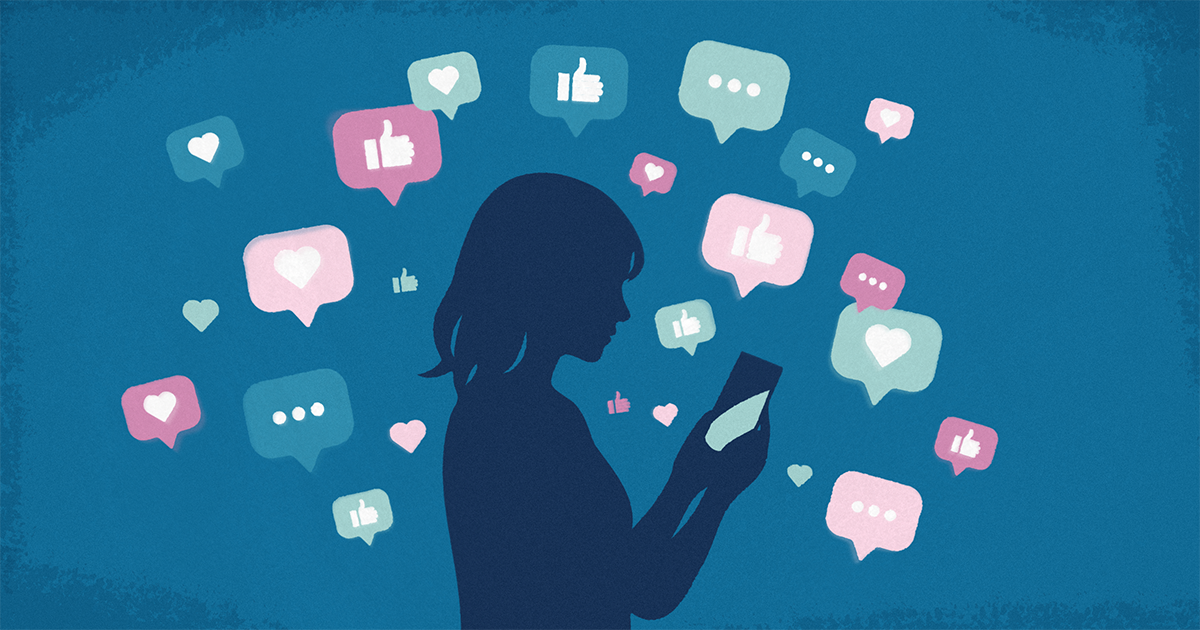
Like, share, comment! These words might be merely white noise to most, but for a young girl with an underdeveloped prefrontal cortex, these three little words can mean everything.
Birthday parties that used to be full of piñata-popping and freeze tag now require carefully orchestrated DIY “photo shoots,” where each attendee leaves with a stuffed photo gallery instead of the traditional goody bag. Fear not, the highly documented event will be fit for public consumption after a short editing session and—if you’re lucky—an approval session where each attendee can veto one or two photos where she doesn’t feel she looks her best (as long as she doesn’t overuse that veto power to the point of annoyance).
In today’s hyper-digitalized world, social media platforms like Instagram, TikTok, and Snapchat shape how young people connect, learn, and see themselves. For teen girls, social media is often normalized as a part of daily life, but its impact on mental and emotional well-being is troubling to say the least.
In fact, one in five teens admits that social media sites hurt their mental health, according to a study by the Pew Research Center.
As a teen girl, I can personally attest to the harmful nature of social media. Scrolling can be exhausting. Video after video of what appear to be perfect bodies, perfect lives, and perfect people who seem to have everything all figured out. Comparison is a tricky “beast”: one that you want to avoid but often can’t. Over time, the constant comparison affects more than just your confidence and mood; it begins to creep into how you view your own worth.
This pressure never truly turns off. Social media follows us home—into our bedrooms and thoughts. Just another thing to add to the already uneasy teen mind.
However, social media isn’t inherently “good” or “bad.” These popular platforms originated from the connections they foster among people. They are even hosts for support networks and generating creativity.
How have these social networks turned into something so harmful?
This answer comes from carefully constructed algorithms. An algorithm identifies which content most strongly triggers dopamine surges for each user, based on their historical activity in the app. Content that promotes perfection and comparison quickly rises to the top due to the constant engagement it receives from teen girls. Over time, girls aren’t just using social media to connect with peers; they’re orchestrating their accounts by performing for social media, measuring self-worth in likes, comments, and shares.
So, what is the answer? I am not advocating for taking away social media altogether, as this would only further teen isolation by ripping girls from their connection to peers and support. However, social media must be reformed if we want to stop its harmful effects on young girls and young women.
As we enter 2026, a new trend emerges. Teens are increasingly choosing authenticity over filters. Many influencers are finally turning away from posting fabricated videos and photos of themselves and embracing authentic, realistic images. We, as a society, must confront and stigmatize the superficial “charm” of social media, including filters, lengthy photo shoots to achieve a perfect shot, and creating a facade instead of sharing reality. Social media will likely remain an integral part of my generation of young girls and future generations. However, if we confront its harms and celebrate those who are willing to strike a new path, we can maximize social media’s greatest benefit: connection.